
Nigeria has never signed the 1961 Hague Apostille Convention, the international treaty that lets over 120 countries certify documents with a single stamp. That single fact trips up thousands of Nigerians every year, at home and abroad, who assume an apostille will work the same way it does for a Ghanaian or Kenyan document. The difference between authentication and apostille catches people off guard at the worst possible time: a university abroad rejects a transcript, an embassy stalls a visa application, or a business deal collapses because someone submitted the wrong certification entirely. Add a Nigerian in Houston or London trying to legalize a birth certificate or degree from thousands of miles away, and the confusion deepens fast, since guides written for Hague member countries simply do not apply to Nigerian documents.
Anyone facing this exact confusion keeps asking the same pressing questions:
- Is authentication and apostille the same thing, or do they follow completely different processes?
- Why can’t Nigerian documents get an apostille stamp like documents from other countries?
- Which government agency handles authentication for Nigerian- issued documents?
- What happens after authentication, and does every country require an extra legalization step?
- How does a Nigerian abroad complete this process without flying home?
Searching scattered forums for straight answers rarely settles these questions with any confidence. This guide breaks down the difference between authentication and apostille in plain terms, explains exactly why Nigeria follows a different path, and walks through the correct steps from start to finish. DocuTrust Africa takes it further, handling document authentication for embassy verification, immigration, and international use, so Nigerians at home and abroad get it right the first time.
Authenticate Your Documents with Confidence
Professional assistance for document authentication, verification, certification, and legalization services to help ensure your documents are accepted by the required institutions and authorities.
Start AuthenticationWhat Is Document Authentication?
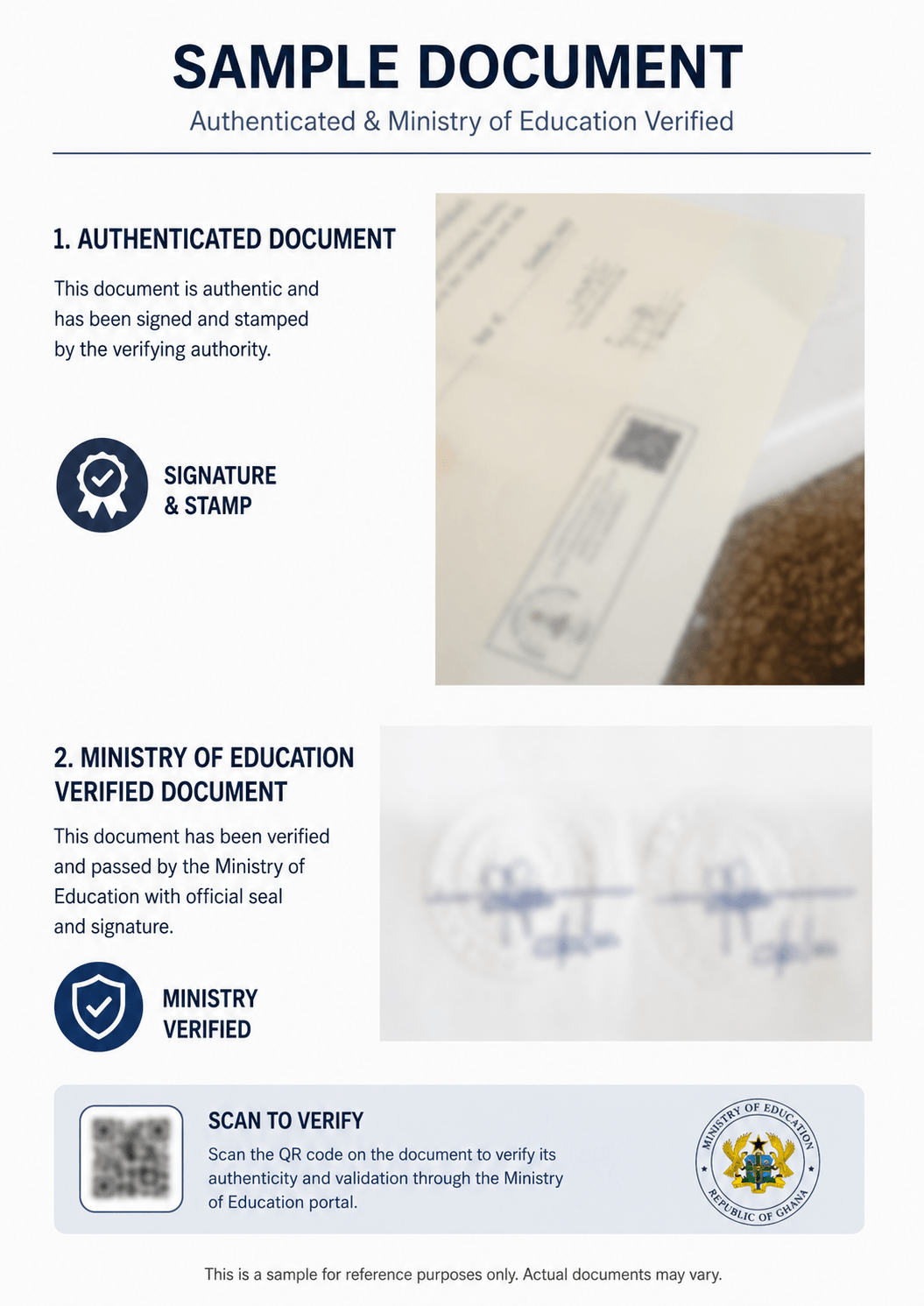
Document authentication describes the process of confirming that a document, and the signature or seal on it, comes from a genuine, recognized authority. In Nigeria, this process happens at the Federal Ministry of Foreign Affairs (MFA) headquarters in Abuja, which certifies documents before they move on to embassy legalization.
Authentication does not stand alone as a final step in most cases. Once the MFA authenticates a document, the relevant foreign embassy or consulate in Nigeria typically legalizes it afterward, adding their own certification before the destination country accepts it. This two- step sequence forms the backbone of the difference between authentication and apostille, since apostille- eligible documents skip the embassy step entirely.
What Is an Apostille?
An apostille is a single certification stamp that a country’s designated authority issues under the Hague Apostille Convention of 1961. Once attached, this stamp makes a document automatically acceptable in every other Hague member country, without any further embassy or consular involvement.
The convention exists specifically to simplify what used to be a multi- step legalization process. A document from France destined for use in Germany, for example, only needs one apostille stamp from the French designated authority, since both countries belong to the Hague Convention. This simplicity is exactly why so many people assume authentication and apostille the same process apply everywhere, when in fact the entire system depends on which countries have joined the convention.
Is Authentication and Apostille the Same? Understanding the Core Distinction
The short answer: no, authentication and apostille the same process do not describe. They solve a similar problem, confirming a document’s legitimacy for use in another country, but they follow entirely different legal pathways.
Apostille works only between countries that have both signed the Hague Convention. Authentication, paired with embassy legalization, applies to countries outside that convention, including Nigeria. Anyone asking whether authentication and apostille mean the same thing really needs to understand this membership distinction first, since it determines which process applies to any given document.
| Feature | Authentication | Apostille |
|---|---|---|
| Legal basis | Bilateral legalization requirements | Hague Apostille Convention 1961 |
| Applies to | Non- Hague member countries, including Nigeria | Hague member countries only |
| Number of steps | Two steps: authentication, then embassy legalization | One step: single apostille stamp |
| Issuing authority | Ministry of Foreign Affairs, then destination embassy | Designated national authority (varies by country) |
| Processing time | Often longer, due to multiple agencies involved | Generally faster, due to single- step process |
Why Nigeria Does Not Issue Apostille Certificates
Nigeria’s absence from the Hague Apostille Convention forces every Nigerian document through the longer authentication- and- legalization pathway. Several factors explain this gap, including administrative capacity concerns, the infrastructure investment required to implement apostille systems, and the coordination needed across multiple issuing authorities.
This absence carries real consequences. While apostille member countries enjoy a streamlined single- step certification process, Nigerians face a more complex authentication- then- legalization pathway, which adds time, cost, and complexity to international documentation. Understanding this context matters, since it directly shapes the difference between authentication and apostille for anyone dealing with Nigerian- issued documents.
The Legal Framework: Hague Convention 1961 and Nigeria’s Ministry of Foreign Affairs
The Hague Convention Abolishing the Requirement of Legalization for Foreign Public Documents, signed in 1961, created the apostille system that over 120 countries now use. Nigeria has never ratified this convention, so the apostille stamp simply does not apply to documents issued within the country.
Instead, Nigeria relies on the Federal Ministry of Foreign Affairs to authenticate documents, working alongside individual embassies and consulates for the legalization step. Some document types add another layer entirely. Educational certificates, for instance, require attestation from the Federal Ministry of Education before the Ministry of Foreign Affairs authenticates them, and before the relevant embassy legalizes them for final use abroad.
Authenticate Your Documents with Confidence
Professional assistance for document authentication, verification, certification, and legalization services to help ensure your documents are accepted by the required institutions and authorities.
Start AuthenticationTypes of Documents That Require Authentication in Nigeria
Several document categories commonly go through the Nigerian authentication process:
- Birth certificates and attestations of birth
- Educational certificates, degrees, and transcripts
- Marriage certificates
- Police character certificates
- Commercial transaction documents
- Power of attorney documents
- Single status affidavits
Not every document qualifies for legalization, however, some documents may conflict with a destination country’s domestic laws or content restrictions, and certain embassies decline to legalize specific document types altogether. Confirming eligibility before starting the process saves significant time and frustration.

Which Countries Require Authentication vs Which Require Apostille?
Knowing whether a destination country accepts apostille or demands authentication changes the entire process. Countries within the Hague Apostille Convention include Ghana, Kenya, Rwanda, South Africa, and well over a hundred others, while Nigeria remains outside this list entirely.
| Scenario | Process Required |
|---|---|
| Document issued in a Hague member country, used in another Hague member country | Apostille only |
| Document issued in Nigeria, used anywhere abroad | Authentication, then embassy legalization |
| Document issued abroad, used in Nigeria | Authentication by the issuing country, then legalization by the Nigerian embassy there |
Common Situations Where People Confuse Authentication and Apostille
Confusion around whether authentication and apostille the same process apply tends to surface in a few recurring situations:
- University applications abroad. Applicants sometimes request an apostille for a Nigerian transcript, only to learn the receiving university needs full authentication and embassy legalization instead.
- Visa applications. Immigration officers occasionally reject documents bearing the wrong certification type, delaying travel plans significantly.
- Cross- border business deals. International partners sometimes assume a Nigerian company document works the same way documents from Hague member countries do.
- Document reuse across countries. A document authenticated for use in one country may still need separate legalization for use in a different country, since authentication does not carry the same universal recognition that an apostille does.
Each of these situations traces back to the same root misunderstanding about the difference between authentication and apostille, and clearing it up early prevents costly delays later.
How Nigerians Abroad Can Authenticate Documents Remotely
Nigerians living in London, Houston, Toronto, or elsewhere abroad often assume they must travel home to complete document authentication. Coordinating between the Ministry of Foreign Affairs, sector- specific attestation bodies, and individual embassies from a distance creates genuine complexity, especially without a reliable point of contact in Nigeria.
A few practical points help the diaspora audience navigate this process:
- Send original documents to a trusted representative in Nigeria who can handle MFA submission on your behalf.
- Confirm the specific requirements of your destination country in advance, since authentication needs vary widely.
- Budget extra time for document transit and multi- agency processing, particularly for documents requiring Ministry of Education attestation first.
- Keep certified copies of every document before starting the process, in case an embassy requests additional verification later.
DocuTrust Africa understands the difference between authentication and apostille, and manages every agency involved, removing most of this burden for Nigerians who cannot appear in Abuja themselves.
Cost and Timeline for Document Authentication in Nigeria
Costs and timelines vary depending on document type, destination country, and how many agencies the process involves. A general breakdown includes:
- Notarization fee: Charged by the Notary Public handling the initial certification
- Ministry of Education attestation fee: Applicable only for educational documents
- MFA authentication fee: Paid directly to the Federal Ministry of Foreign Affairs
- Embassy legalization fee: Varies significantly by country and document type
Processing timelines depend heavily on how many steps a document requires and how efficiently each agency handles submissions. Documents needing only MFA authentication typically move faster than those requiring Ministry of Education attestation and embassy legalization on top of it.
DocuTrust Africa removes that friction entirely. The team reviews every document before submission, catches document conflicts and formatting errors, and tracks each application, so processing stays within the standard 72- hour to two- week window instead of dragging on due to preventable delays. Nigerians abroad never need to worry about time zones, portal downtime, or payment gateway issues, since DocuTrust Africa manages the entire submission from start to finish and simply confirms once the certificate lands.
Common Mistakes to Avoid
- Assuming a Nigerian document qualifies for apostille. Nigeria’s non- membership in the Hague Convention rules this out entirely.
- Skipping sector- specific attestation. Educational documents rejected at the MFA stage often trace back to a missing Ministry of Education attestation.
- Ignoring destination- country requirements. Some countries accept MFA authentication alone, while others require full embassy legalization on top of it.
- Using unverified agents. Fraudulent stamps or shortcuts around the Ministry of Foreign Affairs process can invalidate a document entirely at its final destination.
- Delaying the process near a deadline. Visa applications, university admissions, and business deals rarely pause for a multi- agency authentication process, so starting early avoids unnecessary pressure.
Why Choose DocuTrust Africa for Document Authentication
Understanding the difference between authentication and apostille is one thing; coordinating notarization, Ministry of Education attestation, MFA submission, and embassy legalization without delay is another challenge entirely. DocuTrust Africa handles document authentication for embassy verification, immigration, study abroad, and international use, covering both educational and personal or corporate documents.
Whether a client lives in Lagos or logs in from London, Houston, or Toronto, DocuTrust Africa’s five- step process consultation, requirement review, document submission, processing support, and confirmation removes the guesswork from a process that trips up even experienced travelers. The team tracks each document through every agency involved, so clients never need to wonder whether authentication and apostille the same outcome apply to their specific paperwork. Reach the team at support@docutrustafrica.com or +234 704 029 4819, or start an application through the DocuTrust Africa portal.
A Simple Way to Remember the Difference Going Forward
Anyone who still finds the terminology confusing can rely on one simple test: check whether both the issuing country and the destination country belong to the Hague Apostille Convention. If both do, a single apostille stamp handles everything. If either one, especially Nigeria, sits outside the convention, the document needs full authentication and, in most cases, embassy legalization as well.
This test resolves the difference between authentication and apostille faster than memorizing agency names or process steps. Travelers, students, and business owners who apply this quick check before submitting any document save themselves from the common trap of assuming authentication and apostille the same outcome apply universally. Since Nigeria remains outside the convention, this test almost always points Nigerian document holders toward the longer authentication- and- legalization route, regardless of the specific document type involved.
Keeping this distinction in mind also helps when dealing with documents that cross multiple borders. A Nigerian degree authenticated for use in the United Kingdom, for example, may still need separate legalization if the same document later needs to serve a purpose in a different country, since authentication does not carry the same universal, one- stop recognition that an apostille provides between Hague member states.
Conclusion
Confusing authentication with apostille costs Nigerians time, money, and sometimes entire opportunities abroad. The difference between authentication and apostille comes down to one core fact: Nigeria has never joined the Hague Apostille Convention, so every Nigerian document follows the longer authentication- and- legalization pathway through the Ministry of Foreign Affairs and the relevant destination embassy.
Anyone still wondering whether authentication and apostille the same process really describes should remember this distinction going forward: apostille works only between Hague member countries, while authentication paired with embassy legalization applies to Nigeria and every other non- member country. Getting this right from the start, whether from Abuja or abroad, saves significant frustration later. DocuTrust Africa stands ready to guide the entire process, from notarization to final embassy legalization, so Nigerian documents gain the international recognition they need without unnecessary delay.
Authenticate Your Documents with Confidence
Professional assistance for document authentication, verification, certification, and legalization services to help ensure your documents are accepted by the required institutions and authorities.
Start AuthenticationFrequently Asked Questions on Difference Between Authentication and Apostille
Is authentication and apostille the same process?
No. Apostille applies only between countries that have both signed the Hague Apostille Convention of 1961, while authentication, paired with embassy legalization, applies to non- member countries like Nigeria.
Why can't Nigerian documents get an apostille stamp?
Nigeria has never ratified the Hague Apostille Convention, so the country’s designated authorities cannot issue apostille certificates for Nigerian documents.
Which agency handles document authentication in Nigeria?
The Federal Ministry of Foreign Affairs in Abuja authenticates documents, typically after notarization and, for educational documents, after Ministry of Education attestation.
Do all countries require embassy legalization after MFA authentication?
No. Some countries accept MFA authentication alone, while others, including Italy, China, and the UAE, require both authentication and embassy legalization.
Can Nigerians abroad complete document authentication without traveling home?
Yes, with the right support. A trusted representative in Nigeria can submit documents to the Ministry of Foreign Affairs and relevant embassies on behalf of someone living abroad.
What is the difference between authentication and apostille in terms of processing steps?
Authentication typically involves multiple steps across different agencies, including notarization, sector- specific attestation, MFA authentication, and embassy legalization. Apostille involves a single certification step from one designated authority.
Which document types commonly require authentication in Nigeria?
Birth certificates, educational certificates, marriage certificates, police character certificates, and commercial transaction documents all commonly go through the Nigerian authentication process.
References
- Procedure for Authentication of Documents in Nigeria – Lexology
- Apostille Convention – Wikipedia
- How to Authenticate Document in Nigeria: Complete Authentication Guide (2026) – Legislation.ng
- Hague Apostille Countries – International Apostille
- Hague Conference on Private International Law (HCCH), Convention of 5 October 1961 Abolishing the Requirement of Legalisation for Foreign Public Documents