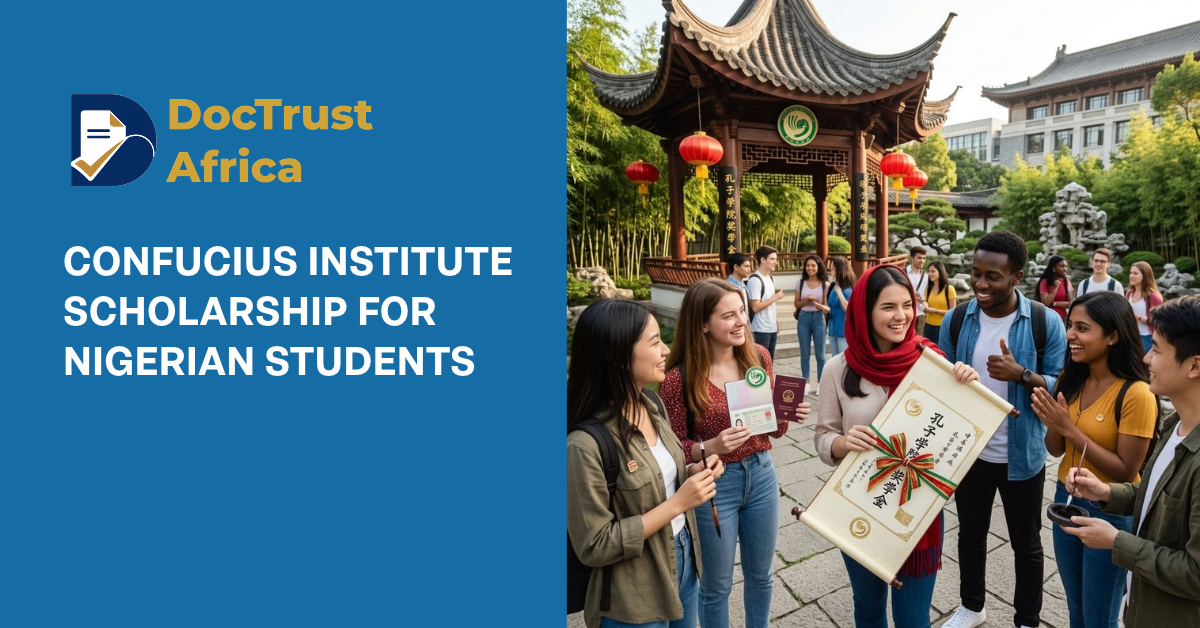

The Confucius Institute scholarship pays tuition, registration, learning materials, and on-campus housing for study in China, and it adds a monthly allowance and insurance. Yet the path trips up many Nigerians. The programme now carries the official name International Chinese Language Teachers scholarship, so older guides mislead readers with outdated rules. You must stay between 16 and 35 years old, and bachelor’s applicants usually need to stay under 25. Language scores matter too: a bachelor’s seat asks for HSK 4 with at least 210 points plus an HSKK oral result, and reports older than two years never count. Your recommending institution must sign a letter, and you still need a medical form, a police certificate, and notarised translations.
These hurdles leave serious students asking:
- Does the Confucius Institute scholarship accept Nigerians, and who runs it?
- What does it cover, and which costs stay with me?
- Which courses are eligible for the Confucius Institute Scholarship?
- When does the next deadline close?
- How do I authenticate and translate my Nigerian certificates?
This page answers every one of those questions. Docutrust Africa handles notarisation, ministry attestation, certified translation, and document tracking for you, and it acts as your representative in Nigeria. Start now, and let Docutrust Africa carry your paperwork while you focus on your HSK practice and your application.
Authenticate Your Documents with Confidence
Professional assistance for document authentication, verification, certification, and legalization services to help ensure your documents are accepted by the required institutions and authorities.
Start AuthenticationWho Offers the Confucius Institute Scholarship?
A single Chinese host, Lanzhou University, plans to enrol 180 students on the Confucius Institute scholarship in 2026. The award pays tuition, housing, medical insurance, and a monthly allowance, yet it rewards candidates who prepare early and submit a clean file. This guide explains who qualifies, what the award pays, how Nigerians apply, and how to authenticate documents for China.
Name change and accuracy note: The Confucius Institute scholarship now carries the official name International Chinese Language Teachers Scholarship, and many universities still use the old name. The rules change each cycle, so confirm every detail on the official portal at cis.chinese.cn before you apply.
The Center for Language Education and Cooperation (CLEC), a body under China’s Ministry of Education, offers the scholarship. CLEC created it to meet the growing demand for Chinese language teachers outside China.
Recommended institutions nominate candidates, and Chinese host universities enrol them. Recommended institutions include Confucius Institutes, Confucius Classrooms, selected HSK test centres, foreign universities with Chinese departments, and Chinese embassies and consulates abroad. In Nigeria, two university-based Confucius Institutes anchor the system: the University of Lagos and Nnamdi Azikiwe University in Awka. Hanban and Nnamdi Azikiwe University signed the agreement for the Awka institute in March 2008, and the university’s board includes Xiamen University. The National Universities Commission (NUC) approved a full-time Chinese B.A. programme there in 2013.
Why Apply for the Confucius Institute Scholarship?
- Full funding: The award covers tuition, accommodation, living allowance, and health insurance.
- Language immersion: You study Chinese in China, where you progress fastest.
- Career paths: Chinese language skills open doors in teaching, trade, and diplomacy.
- Priority perks: The selection gives priority to applicants who show a teaching job after graduation.
- Flexible lengths: Options range from four weeks to a full bachelor’s degree.
How Much Is the Confucius Institute Scholarship Worth?
| Benefit | Details |
| Tuition | Host institution manages and covers it |
| Housing | Free on-campus housing, usually double rooms |
| Off-campus allowance | RMB 700 per month (RMB 1,000 for doctoral students), with host permission |
| Living allowance | RMB 2,500 per month for bachelor’s, one-year, and one-semester students; RMB 3,000 for master’s; RMB 3,500 for doctoral |
| Medical insurance | RMB 800 per year for students staying over a year; RMB 400 for one semester; RMB 100 for four weeks |
Four-week students receive no living allowance.
Rules that affect your money:
- Register by the 15th of the month for the full allowance, or the host pays half.
- Leave China for more than 15 days (outside winter and summer breaks), and the allowance pauses.
- The official coverage list does not include international airfare, so plan for your own flight.

How Many People Will Win the Confucius Institute Scholarship?
CLEC publishes no total for Nigeria. Each host sets its own plan. Lanzhou University, for example, plans to enroll 180 students in 2026. CLEC also weighs geographical distribution in its decisions, so places spread across many countries.
What Is the Acceptance Rate of the Confucius Institute Scholarship?
No official acceptance rate exists. CLEC’s expert panel decides based on HSK and HSKK levels and scores, geographical distribution, and other factors. Higher test scores and a strong recommendation therefore matter more than any quota guess.
Which Courses Are Eligible for the Confucius Institute Scholarship?
The scholarship funds International Chinese Language Education and related majors, plus Chinese language study. Four-week programmes also cover Chinese studies, Traditional Chinese Medicine, Taiji culture, and a home-stay experience in a Chinese family. Each host lists its own programmes on the portal, so match your choice to the host.
Which Levels Are Eligible for the Confucius Institute Scholarship?
| Category | Length | Minimum Language Score |
| Master’s in International Chinese Language Education | Up to 2 years | HSK 210 (Level 5) and HSKK 60 (Intermediate) |
| Bachelor’s in International Chinese Language Education | Up to 4 years | HSK 210 (Level 4) and HSKK 60 (Intermediate) |
| One academic year | Up to 11 months | HSK 270 for the teacher-education track, 210 for Chinese language study |
| One semester | Up to 5 months | HSK 180, plus HSKK for teacher education |
| Four weeks | 4 weeks | HSK scores; group programme organised by a recommending institution |
Some hosts also run doctoral places, with a living allowance of RMB 3,500. Bachelor’s applicants need a senior secondary diploma, and master’s applicants need a bachelor’s degree.
Age Requirements
You must be between 16 and 35 on 1 September 2026. In-service Chinese teachers can go up to 45, and bachelor’s applicants should usually be younger than 25. You must also hold non-Chinese citizenship, stay in good health, and show interest in Chinese language education. Applicants under 18 must submit guardianship documents signed by a guardian in China.
How to Apply for the Confucius Institute Scholarship
- Take the HSK and HSKK. Book both tests early, because your score reports must stay valid for two years.
- Find a recommending institution. Contact the Confucius Institute at the University of Lagos or Nnamdi Azikiwe University, or another eligible body.
- Create an account. Register on the application portal at cis.chinese.cn.
- Choose a host and programme. Browse the participating Chinese universities.
- Upload your documents. Submit scans and complete the form.
- Track the review. Check portal comments, email, and your recommending institution for follow-up.
- Accept and register. If you win, print your scholarship certificate and register at the host by the date in your admission letter.
The Zhejiang Normal University guide also warns that hosts may contact applicants for an interview.
Authenticate Your Documents with Confidence
Professional assistance for document authentication, verification, certification, and legalization services to help ensure your documents are accepted by the required institutions and authorities.
Start AuthenticationWhat Documents Does the Confucius Institute Scholarship Require?
| Document | Who Submits It |
| Passport photo page | Everyone |
| HSK and HSKK score reports (valid two years) | Everyone |
| Recommendation letter from the head of the recommending institution | Everyone |
| Highest qualification (or proof of expected graduation) and transcripts | Degree applicants |
| Two recommendation letters from associate professors or above | Master’s applicants |
| Two professor letters, a Chinese personal statement (about 3,000 words), and a research plan | Doctoral applicants |
| Proof of employment and an employer’s letter | In-service teachers |
| Guardianship documents signed in China | Applicants under 18 |
Hosts may ask for extra items, and students who fail the pre-enrolment medical exam lose the scholarship.
Is the Confucius Institute Scholarship Ongoing Now?
Partly. As of 9 October 2026, the main cycle for September 2026 has closed, because that deadline fell on 15 May. The one-semester programme for March 2027, however, accepts applications until 31 October 2026, and recommending institutions must finish review by 10 November 2026. Check the portal for the exact status, since the semester track applies only to eligible levels.
The next full cycle, for September 2027, should open around 1 March 2027, based on the 2026 pattern. The 2025 portal opened on 20 February.
What Can I Do to Win the Confucius Institute Scholarship This Year?
- Raise your HSK and HSKK scores. CLEC ranks files on test levels and scores.
- Aim above the minimum. A higher score separates you from other applicants at the same level.
- Show a teaching plan. The selection gives priority to applicants who provide a work contract or proof of teaching employment after study.
- Join Chinese Bridge competitions. Winners can use their scholarship certificates in the application.
- Secure a strong recommendation. Ask your Confucius Institute early.
Application Deadline
| Programme Start | Student Deadline (Beijing Time) |
| July 2026 (four-week) | 15 April 2026 |
| September 2026 | 15 May 2026 |
| December 2026 (four-week) | 15 September 2026 |
| March 2027 (one-semester) | 31 October 2026 |
| September 2027 | Expect around mid-May 2027; confirm on the portal |
Host universities set their own earlier or later review dates, so check each host.
Selection Procedures
- Student application: You submit your file before the deadline.
- Recommending institution review: Your Confucius Institute or other recommender checks and forwards the file.
- Host review: The Chinese university reviews your documents and may interview you.
- CLEC panel decision: An expert panel decides based on HSK and HSKK levels, geography, and other factors.
- Results: CLEC publishes results about three months before the programme starts.
- Admission and registration: You receive an admission letter, print your scholarship certificate, and register on time.
Does the Confucius Institute Scholarship Have Past Questions?
The scholarship itself has no written exam, so no past questions exist for the award. The HSK and HSKK tests do have official sample materials, so practise with those. Your Confucius Institute can also guide your preparation, and the Institute at the University of Lagos runs HSK exams regularly.
Do You Need IELTS to Get the Confucius Institute Scholarship?
No. The document list asks for HSK and HSKK reports, not IELTS or TOEFL. Chinese test scores carry the weight in this selection, so spend your preparation time on Mandarin. Hosts may ask for other proof, so read each host’s guide.
Tips for Applying for the Confucius Institute Scholarship
- Start with your nearest Confucius Institute, because nomination happens locally first.
- Book your HSK and HSKK dates months ahead.
- Match your programme to your test level, and avoid applying above it.
- Keep your passport valid, and scan every page clearly.
- Use the same name on every document.
- Watch portal comments and respond quickly.
- Verify any fee request with CLEC at scholarships@chinese.cn before you pay.
What Should I Do If I Don’t Win the Confucius Institute Scholarship?
- Reapply next cycle. Raise your scores and improve your recommendation.
- Beware of the repeat rule. Past winners cannot take the one-year or one-semester route again within three years.
- Try other Chinese awards. Xiamen University lists the Chinese Government Scholarship, the Fujian Provincial Government Scholarship, and its own university scholarships.
- Keep learning Chinese. The Confucius Institutes in Lagos and Awka run structured courses.
- Keep your documents current. Authenticated papers speed up your next attempt.
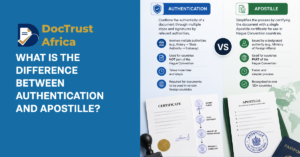
How Can Nigerians Authenticate Documents for the Confucius Institute Scholarship?
The portal asks for scans, but a host university, visa office, or later admission step may ask for authenticated originals. The Chinese Embassy’s official rule says documents issued in Nigeria for use in mainland China need notarization and legalization by Nigerian authorities first, followed by legalization at the Chinese Embassy or Consulate.
China joined the Hague Apostille Convention, effective 7 November 2023, but Nigeria never did. Nigerian documents therefore still need consular legalization.
| Step | Action | Agency |
| 1 | Get certified copies of your certificates and transcripts | Your school or university registry |
| 2 | Notarize the copies | Licensed Notary Public |
| 3 | Attest educational documents | Federal Ministry of Education |
| 4 | Authenticate the documents | Federal Ministry of Foreign Affairs, Abuja |
| 5 | Legalize the documents | Chinese Embassy, through the China Visa Application Service Center |
Fix record problems first. If your name differs across your passport and certificates, swear a Change of Name Affidavit under the Oaths Act and publish a newspaper notice. Replace any lost certificate before you start.
Where Can Nigerian Students Authenticate Their Academic Documents for the Confucius Institute Scholarship?
- Notary Public offices in Abuja, Lagos, and other cities handle notarization.
- The Federal Ministry of Education attests academic certificates.
- The Federal Ministry of Foreign Affairs headquarters in Abuja authenticates documents before Chinese legalization.
- The China Visa Application Service Center in Abuja (Murjanatu House, 3rd Floor, 1 Zambezi Crescent, Maitama) accepts legalization requests from non-Chinese nationals in the Abuja district. Residents of Lagos, Ogun, Osun, Ekiti, Ondo, Kogi, Edo, Delta, Bayelsa, Anambra, Imo, Rivers, Enugu, Abia, Akwa Ibom, Nasarawa, Benue, Ebonyi, Cross River, and Taraba use the Lagos centre.
- Document support services like DocuTrust Africa coordinate the chain for students outside Abuja or abroad.
The Embassy keeps the right to approve or reject each application, and it advises applicants to check the requirements before they submit.
How DocuTrust Africa Helps You Submit a Winning File
A high HSK score means little when a document problem stalls the process. DocuTrust Africa handles document authentication for study abroad, embassy verification, and immigration, plus affidavit services and newspaper publication for name corrections, age declarations, and lost documents.
The team’s five-step process, consultation, requirement review, document submission, processing support, and confirmation, gives you a clear timeline. Students in Lagos, Awka, or London follow the same process, and the team tracks each ministry and embassy stage. Reach DocuTrust Africa at support@docutrustafrica.com or +234 704 029 4819, or start an application through the DocuTrust Africa portal.
Conclusion
The Confucius Institute scholarship gives Nigerian students funded study in China, with tuition, housing, insurance, and a monthly allowance. Success depends on four things: strong HSK and HSKK scores, a recommending institution, a complete file, and correctly legalized documents.
The next full cycle should open around March 2027, so you have months to prepare. Book your language tests, contact the Confucius Institute at the University of Lagos or Nnamdi Azikiwe University, and fix any name or certificate issue now. When you want an expert to handle the document chain, DocuTrust Africa stands ready to guide every step.
Authenticate Your Documents with Confidence
Professional assistance for document authentication, verification, certification, and legalization services to help ensure your documents are accepted by the required institutions and authorities.
Start AuthenticationFrequently Asked Questions
Can Nigerians apply for the Confucius Institute scholarship?
Yes. Any non-Chinese citizen aged 16 to 35 can apply with a recommendation from an eligible institution, such as a Confucius Institute.
Is the Confucius Institute scholarship still called that?
Officially, the programme now carries the name International Chinese Language Teachers Scholarship, though many universities still use the old name.
How much does it pay each month?
Bachelor’s, one-year, and one-semester students receive RMB 2,500, master’s students receive RMB 3,000, and doctoral students receive RMB 3,500.
Do I need IELTS?
No. The application asks for HSK and HSKK scores instead.
Does the scholarship pay for flights?
The official coverage list names tuition, housing, allowance, and insurance, but not international airfare, so plan for your own ticket.
Is there an application deadline now?
The September 2026 cycle has closed. The one-semester programme for March 2027 accepts applications until 31 October 2026, and the next full cycle should open around March 2027.
Can DocuTrust Africa help me with documents?
Yes. DocuTrust Africa coordinates authentication, affidavits, and newspaper publication for Nigerians at home and abroad.
References
- Xiamen University Admissions — “International Chinese Language Teachers Scholarship 2026”
- Xiamen University Admissions — “Scholarships Information”
- Lanzhou University, — “International Chinese Language Teachers Scholarship”
- Zhejiang Normal University — “International Chinese Language Teachers Scholarship”
- Confucius Institute for Scotland — “Scholarships to China”
- Nnamdi Azikiwe University — “Chinese/Confucius Institute”
- ResearchGate — “Global Diffusion of Chinese Culture: The Case of Confucius Institute in Africa (Nigeria)”
- Chinese Embassy in Nigeria — “Consular Legalization of Documents to China”
- Chinese Embassy in Nigeria — “Legalization”
- Schmidt & Schmidt — “Apostille and consular legalization of documents in China”
- Legalisation.ng — “How to Legalise Documents at the Chinese Embassy in Nigeria”
- Mondaq — “Document Legalization And Authentication In Nigeria”
- Oaths Act, Laws of the Federation of Nigeria (LFN) 2004