
Authentication of certificate is often the final bridge between your achievements in Nigeria and opportunities abroad. Imagine receiving an admission letter from your dream university or a job offer from an international employer, only to discover that your WAEC certificate or academic transcript cannot be accepted until it has been officially authenticated. For thousands of Nigerians pursuing education, employment, or migration every year, this is not a hypothetical situation, it’s a critical step in making their qualifications internationally recognized.
The importance of authenticating academic documents continues to grow as cross-border education and employment increase. According to the UNESCO Global Education Monitoring Report, millions of students study outside their home countries each year. This makes document verification an essential part of international admissions and credential recognition. Likewise, employers and professional bodies increasingly verify academic credentials to combat certificate fraud and protect the integrity of their recruitment processes.
If you’re preparing to travel abroad, further your education, or build an international career, understanding the authentication process can save you time, money, and unnecessary frustration. This post explains everything you need to know about the authentication of certificates in Nigeria. This include WAEC certificates, university degrees, and academic transcripts. You’ll also learn how DocuTrust Africa simplifies the process by helping applicants complete each stage accurately and efficiently.
What Is Authentication of Certificate?
Authentication of certificate is the official process of verifying that an academic or professional certificate is genuine and was issued by the appropriate institution or examination body. In Nigeria, this process often involves the issuing institution, the relevant government authority, and, where required, the Ministry of Foreign Affairs (MFA) before the certificate can be accepted for international use.
The purpose of authentication of certificates is to confirm the authenticity of the document and prevent the use of forged or altered certificates. Once authenticated, the certificate is more likely to be recognized by foreign universities, employers, professional bodies, immigration authorities, and embassies, depending on their specific requirements.
Why Is Certificate Authentication Important for WAEC, Transcripts, and Other Academic Documents?
Completing the authentication of certificate is essential if you intend to use your academic documents outside Nigeria. Many foreign institutions require authenticated certificates to verify that the documents submitted are legitimate before they process applications.
Here are some of the key reasons why certificate authentication is important:
- It confirms authenticity: It verifies that your WAEC certificate, transcript, degree, or other academic document was genuinely issued by the relevant institution or examination body.
- It supports international applications
- It reduces the risk of document rejection
- It helps prevent fraud: Authentication protects institutions from accepting forged or altered academic credentials.
- It facilitates cross-border recognition: Many countries require authenticated educational documents before recognizing qualifications obtained in Nigeria.
Which Certificates Can You Authenticate in Nigeria?
The authentication of certificate process applies to a wide range of academic, professional, and official educational documents. However, the exact authentication requirements may vary depending on the issuing institution and the country where the document will be used.
Some of the most commonly authenticated certificates include:
- WAEC certificates.
- NECO certificates.
- NABTEB certificates.
- University degree certificates.
- Polytechnic National Diploma (ND) and Higher National Diploma (HND) certificates.
- College of Education certificates (NCE).
- Academic transcripts.
- Statements of result.
- Professional certificates issued by recognized professional bodies.
- Postgraduate certificates and other educational qualifications.
If you want a more convenient experience, DocuTrust Africa provides professional support with certificate authentication, helping applicants prepare the required documents and navigate each stage of the process efficiently.
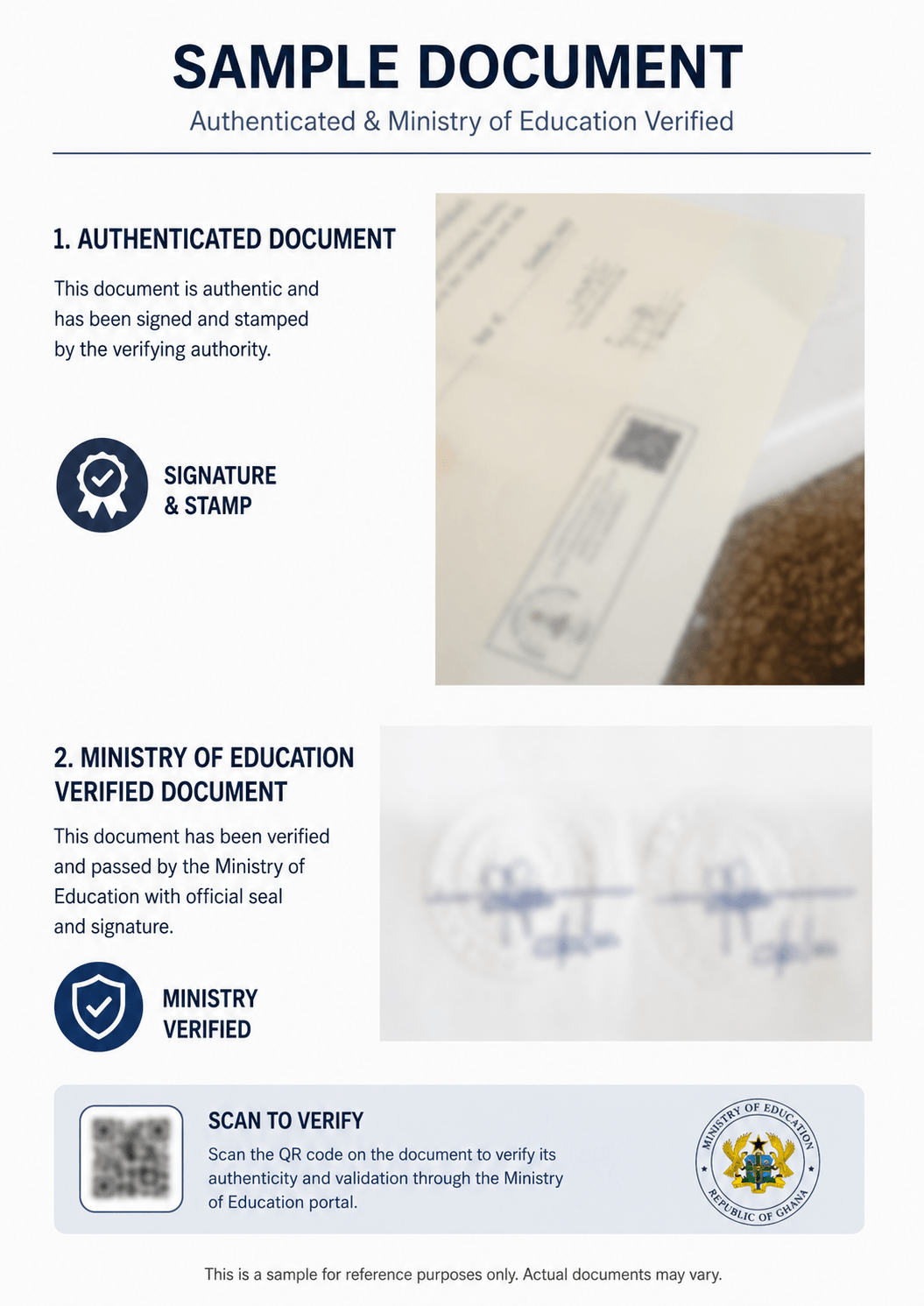
Authenticate Your Documents with Confidence
Professional assistance for document authentication, verification, certification, and legalization services to help ensure your documents are accepted by the required institutions and authorities.
Start AuthenticationWhat Documents Are Required for Certificate Authentication?
Before starting the authentication of certificate process, you need to get the required documents. Meanwhile, before submitting your documents, ensure that all names, dates, and certificate details are accurate and consistent. Typically, most applicants are asked to provide the following:
- The original certificate or transcript to be authenticated.
- A clear photocopy of the certificate or transcript.
- A valid means of identification, such as a National Identification Number (NIN) slip/card, International Passport, Driver’s Licence, or Voter’s Card.
- A completed application form, where applicable.
- Passport photograph(s), if requested by the relevant authority.
- Proof of payment of the prescribed authentication fees.
- A letter of authorization, if someone is processing the application on your behalf.
- Any additional documents required by the issuing institution, the Ministry of Education, the Ministry of Foreign Affairs, or the receiving organization.
How to Authenticate Your WAEC Certificate in Nigeria
If you’re planning to study, work, or relocate abroad, you may need to complete the authentication of certificate process for your WAEC certificate. Although the exact requirements may vary depending on the destination country, the following steps generally apply.
#1. Obtain and Access Your Certificate
- Digital Copy: Access and print your digital certificate through the WAEC Digital Certificate Platform or WAEC Portal. This often requires a fee.
- Physical Copy: If your certificate is already printed, ensure you have the original copy. WAEC no longer prints physical copies if yours is lost, making the digital platform the primary alternative.
- School/WAEC confirmation: Ensure your high school issues a transcript verifying your grades if you need this for further evaluation.
#2. Federal Ministry of Education Authentication
Authentication at the Federal Ministry of Education is the first official prerequisite.
- Go to the official ESS Portal to begin the process.
- Upload clear, scanned copies of your original WAEC certificate or the official digital printout.
- Book an appointment online for the physical/virtual verification. The physical processing for this is currently anchored in Abuja.
#3. Federal Ministry of Foreign Affairs (MFA) Legalization
If you need your certificate authenticated for international use (e.g., visas or foreign universities), you must follow up with the Ministry of Foreign Affairs.
- You must have your document authenticated by the Ministry of Education first.
- Present the stamped/sealed documents to the Ministry of Foreign Affairs for final legalization.
How Much Does Authentication of Certificate Cost in Nigeria?
The cost of authentication of certificate in Nigeria depends on the type of certificate, the government agencies involved, the number of pages, and whether the destination country requires additional legalization by an embassy or consulate.
Generally, the official government fee for document authentication at the Ministry of Foreign Affairs (MFA) ranges from ₦2,000 to ₦5,000 per page. However, the total cost of authenticating a certificate for international use typically falls between ₦17,000 and ₦45,000 or more per document.
Please note that Remita fees and administrative/service charges apply separately. If you’re looking for a simpler and more transparent process, DocuTrust Africa offers certificate authentication services.
How Long Does Certificate Authentication Take in Nigeria?
Certificate authentication in Nigeria typically takes 2 to 5 working days at the Ministry of Foreign Affairs (MFA) in Abuja. If you are authenticating academic documents, you must first verify them at the Federal Ministry of Education, which takes an additional 1 to 3 days.
The exact processing timeline depends on the document type and stage and they include:
- Ministry of Education (Academic Docs): 1–3 working days.
- Ministry of Foreign Affairs (MFA): 2–5 working days.
- Embassy Legalization (if going abroad): 1 to 4 weeks depending on the destination country’s embassy.
- Personal documents (like birth or marriage certificates): usually take about 3 to 7 days in total.
Where Can You Authenticate Certificates in Nigeria?
Generally, authenticating certificates in Nigeria depends on the type of certificate and its final destination. The most common places to authenticate certificates include:
- Academic Certificates (Locally & For Study Abroad): The Federal Ministry of Education has digitized its document authentication process. You can now verify and process your qualifications online through the ESS Evaluation and Accreditation System.
- General Documents (For International Use): For your documents to be recognized globally, you must authenticate them at the Ministry of Foreign Affairs (MFA), located at the Tafawa Balewa House in Abuja.
- Certified True Copies for UK/Commonwealth: If you need certified copies of your original certificates for the UK, you can book an appointment at a British Council Nigeria office located in Abuja, Lagos, or Port Harcourt.
- DocuTrust Africa: If you want a convenient, professionally managed process, DocuTrust Africa provides end-to-end certificate authentication services. The team assists with document review, Ministry of Education authentication, Ministry of Foreign Affairs authentication, and guidance on embassy legalization where required. This saves applicants time and reduces the risk of avoidable errors.
If you prefer a seamless experience, DocuTrust Africa offers a reliable solution by managing the authentication process from start to finish. This allow you to focus on your travel, study, or career goals while experienced professionals handle the documentation.
Authenticate Your Documents with Confidence
Professional assistance for document authentication, verification, certification, and legalization services to help ensure your documents are accepted by the required institutions and authorities.
Start AuthenticationFrequently Asked Questions About Authentication of Certificate in Nigeria
Is certificate authentication mandatory for studying or working abroad?
In many cases, yes. Foreign universities, employers, immigration authorities, and professional bodies often require authentication of certificate to verify that your academic credentials are genuine. However, the exact requirement depends on the destination country and the institution requesting your documents.
Can I authenticate photocopies of my certificate?
Most authorities require the original certificate for authentication. While photocopies may be requested as part of your application, the original document is typically needed for verification before authentication is completed.
Can someone process my certificate authentication on my behalf?
Yes. If you’re unable to complete the process yourself, you can authorize a trusted representative or use a professional documentation service. In some cases, you may need to provide a signed authorization letter and copies of your identification documents.
What should I do if my certificate contains incorrect information?
Authentication does not correct errors on a certificate, it only verifies the authenticity of the document presented. So, if your certificate has errors such as an incorrect name or date of birth, you should first contact the issuing institution or examination body to resolve the discrepancy.
Can DocuTrust Africa help with WAEC certificate and transcript authentication?
Yes. DocuTrust Africa assists with the authentication of WAEC certificates, university degrees, academic transcripts, and other educational documents. The platform also provides guidance throughout the process, helping applicants prepare the required documents and complete authentication with the relevant government authorities.
References
foreignaffairs.gov.ng – Document authentication
waec.org – Authentication of WAEC Certificate