
South Korea has welcomed international scholars since 1967, and the Global Korea Scholarship now counts over 19,500 graduates from 161 countries, with Nigeria firmly on that growing list, according to the Ministry of Education and the National Institute for International Education (NIIED). A fully funded Korean government scholarship covers tuition, living costs, and flight tickets, yet thousands of qualified Nigerian students miss this opportunity every single cycle, not because they lack grades or ambition, but because document authentication derails their application at the final stretch. A degree certificate without proper legalization, a birth certificate the embassy flags as unverified, an age declaration missing the correct court seal, each one quietly disqualifies an otherwise strong candidate before the selection committee ever reviews their academic merit. Anyone chasing this scholarship keeps asking the same urgent questions:
- What does the Korean Government Scholarship actually cover, and who qualifies?
- Embassy Track or University Track, which route fits a Nigerian applicant best?
- What documents, certificates, and affidavits does NIIED require, and how should they get notarized?
- What common mistakes cause Nigerian applications to miss out year after year?
Chasing scattered scholarship forum advice rarely settles these document questions with confidence before a deadline closes. This guide breaks down exactly what Nigerian applicants need for the Korean government scholarship, from eligibility to authenticated paperwork. DocuTrust Africa takes it further, handling document authentication for study abroad applications, so Nigerian students submit a complete, verified file without losing a life-changing opportunity to a paperwork error.
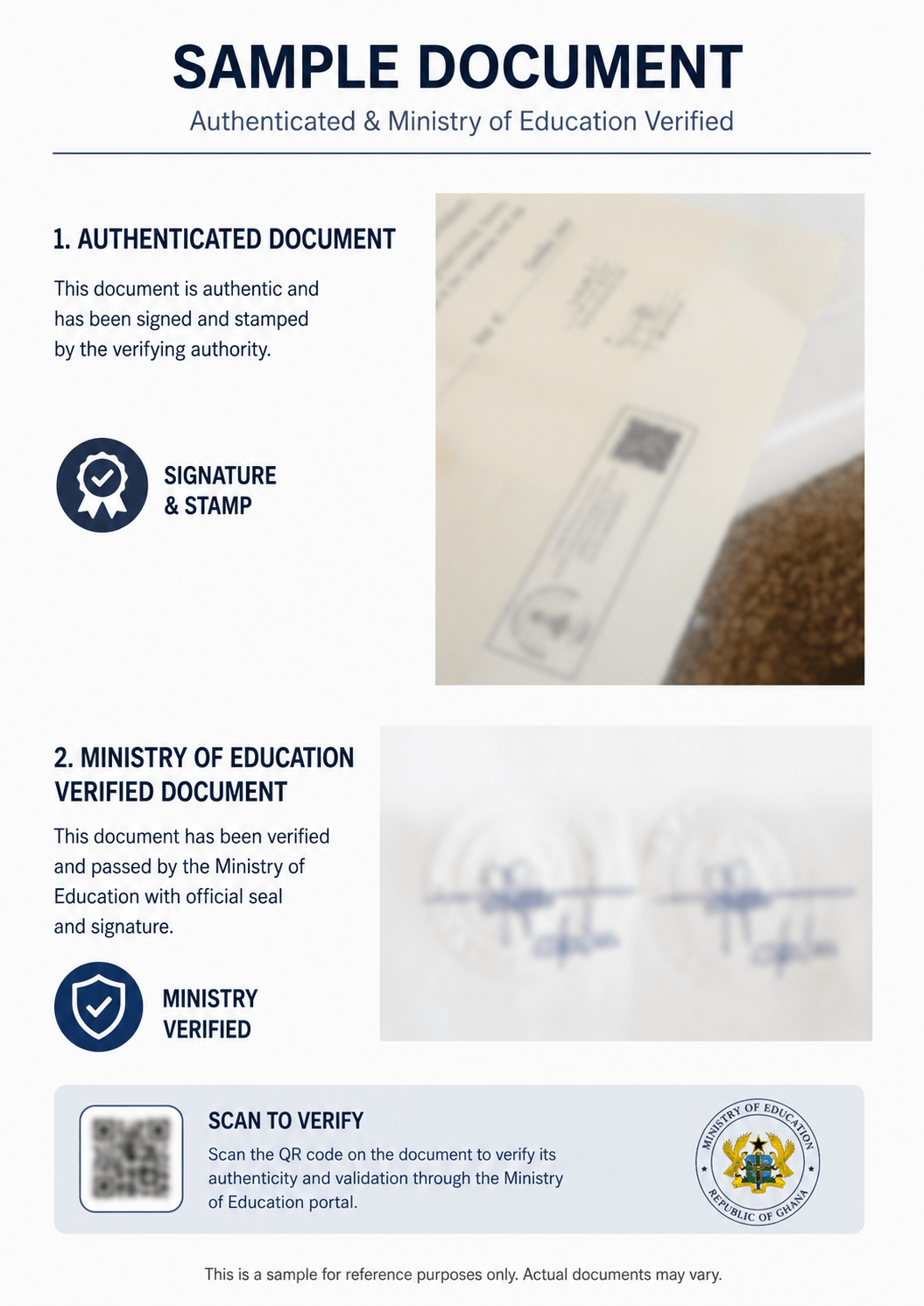
Authenticate Your Documents with Confidence
Professional assistance for document authentication, verification, certification, and legalization services to help ensure your documents are accepted by the required institutions and authorities.
Start AuthenticationWho Offers the Korean Government Scholarship?
The Korean government plans to invite 2,000 international students through the Global Korea Scholarship Program for graduate degrees in 2026. The Korean Government Scholarship pays for tuition, flights, and monthly living costs, yet many strong Nigerian candidates lose their chance at the last stage, because an unauthenticated certificate or a mismatched name sinks the whole application.
Quick note on accuracy: NIIED updates the guidelines every year, and different websites quote different figures. Always confirm final details on the official Study in Korea portal before you apply.
The Korean Ministry of Education funds the scholarship, and the National Institute for International Education (NIIED) runs it. Korea merged its earlier scholarship schemes under one brand in 2010, so you will see the same programme called KGSP, GKS, or Global Korea Scholarship.
In Nigeria, the Korean Cultural Centre in Abuja has handled Embassy Track document submission in past cycles. The Korean Embassy itself has stated that it does not receive GKS applications and points applicants to the Cultural Centre instead. Confirm the current process each year, since arrangements can change.
Why Apply for the Korean Government Scholarship?
Several strong reasons push Nigerian students toward this award:
- Full funding: The package covers tuition, airfare, a monthly allowance, health insurance, and language training.
- A free Korean language year: Most graduate scholars spend their first year learning Korean at no cost.
- Top universities: Scholars study at leading Korean research universities.
- Career value: A Korean degree opens doors in technology, engineering, business, and international development.
- Africa-focused options: The wider GKS family also includes a summer programme for African and Latin American students.
How Much Is the Korean Government Scholarship Worth?
The Korean Government Scholarship covers most major costs for the whole scholarship period. Reported figures for graduate scholars include:
| Benefit | What It Covers |
| Tuition | NIIED covers up to KRW 5 million per semester, and the host university covers any excess. |
| Airfare | One round-trip economy ticket |
| Monthly allowance | KRW 1,000,000 per month at Korea University’s graduate school |
| Research allowance | KRW 210,000 (humanities and social sciences) or KRW 240,000 (natural and mechanical sciences) |
| Settlement allowance | One-time KRW 200,000 on arrival |
| Korean proficiency grant | KRW 100,000 per month for TOPIK Level 5 or 6 holders |
| Health insurance | Included in the package |
A word on the monthly allowance: Older guidance quotes KRW 900,000, while some 2026 summaries report an increase to about KRW 1,380,000 for Master’s and doctoral scholars. Check the current NIIED guideline for the exact amount.
Scholars who withdraw within three months must refund all funds, including airfare, so commit only when you plan to finish.
How Many People Win the Korean Government Scholarship?
NIIED plans to select 2,000 graduate students worldwide in 2026. For undergraduates, the 2026 cycle invited 280 students globally.
NIIED sets country quotas for each cycle, and the Nigeria figure changes from year to year. Treat any website that quotes a fixed Nigerian number with caution, and check the current notice from the Korean Cultural Centre.
What Is the Acceptance Rate of the Korean Government Scholarship?
NIIED does not publish an official acceptance rate for Nigeria. Competition stays high because slots are limited worldwide while many countries compete. Strong candidates stand out through three things: solid grades, a clear study plan, and a complete, correctly authenticated document set.
Which Courses Are Eligible for the Korean Government Scholarship?
Eligible fields depend on the universities that take part each year. NIIED publishes an “Available Universities and Fields of Study” list in the application guidelines, and you must match your department name exactly to that list.
Science and engineering applicants receive a bonus of 5% of the total allocated score in the undergraduate selection. Always read the field list before you choose a programme.
Which Levels Are Eligible for the Korean Government Scholarship?
The Korean Government Scholarship covers several levels:
| Programme | Level | Duration |
| GKS-U | Associate or Bachelor’s degree | 4 to 5 years, including language training |
| GKS-G | Master’s degree | 3 years (1 language year + 2 degree years) |
| GKS-G | Doctoral degree | 4 years (1 language year + 3 degree years) |
| Research Program | Non-degree research | 6 months to 1 year |
| Global Network Program | Master’s degree | Within 2 years |
Scholars with TOPIK Level 5 or 6 skip the Korean language year. Every other scholar must reach TOPIK Level 3 to start the degree.
Age Requirements
Age limits differ by programme:
- Graduate (Master’s and PhD): You must stay under 40 at the time of application (UNHCR Iran).
- Undergraduate: You must stay under 25. For the 2027 cycle, you need a birth date after 1 March 2002.
Other core rules apply too. You and both parents must hold non-Korean citizenship. Master’s applicants need a Bachelor’s degree, and doctoral applicants need a Master’s degree. Past GKS recipients cannot apply again.
How to Apply for the Korean Government Scholarship
Follow these steps:
- Choose one track. Pick either the Embassy Track or the University Track. You cannot apply to both.
- Read the current guidelines. Download the latest application guidelines and the university list from Study in Korea.
- Select universities and fields. Match department names exactly to the official list.
- Prepare and authenticate documents. Start this step first, because it takes the longest.
- Complete the forms. Write your personal statement and study plan in English or Korean, and ask your recommender to complete the recommendation form.
- Submit through the right channel. Embassy Track applicants upload through the online system and follow the Korean Cultural Centre’s instructions. University Track applicants apply directly to the university.
- Prepare for interviews. Some selection stages include interviews.
What Documents Does the Korean Government Scholarship Require?
Graduate checklists list these items:
| Document | Notes |
| Application form | Typed in English or Korean |
| Personal statement | Your motivation and goals |
| Study plan | Your academic and language plan |
| Research proposal | Research Program applicants only |
| Letter of recommendation | Form completed by your recommender |
| Applicant agreement | Signed form |
| Personal medical assessment | Completed form |
| Consent to collect personal information | Signed form |
| Proof of citizenship and family relationship | Applicant and parents (for example, birth certificate and passport) |
| Bachelor’s diploma and transcript | Required for all graduate applicants |
| Master’s diploma and transcript | Required for doctoral applicants |
| TOPIK or English test score | Optional, but it earns extra credit |
The guidelines require notarized, apostilled, or consular-confirmed documents. Ordinary notarized copies do not replace authenticated documents, and NIIED does not return anything you submit. Your transcript also needs an accepted CGPA, an official grade conversion, or proof of class rank.
Authenticate Your Documents with Confidence
Professional assistance for document authentication, verification, certification, and legalization services to help ensure your documents are accepted by the required institutions and authorities.
Start AuthenticationIs the Korean Government Scholarship Ongoing Now?
As of October 2026, the undergraduate GKS-U cycle for 2027 runs from September to November 2026, with exact dates depending on the university. NIIED expects final results around 7 January 2027.
The graduate cycle follows a different calendar. Recent graduate applications opened in February to March. In 2024, for example, the Korean Cultural Centre in Nigeria set a 7 March deadline for Embassy Track submissions. Graduate students should therefore use the months before the next announcement to authenticate documents.
What Can I Do to Win the Korean Government Scholarship This Year?
Focus on the factors you control:
- Raise your academic profile. Strong grades matter most. Request an official class-rank or grade-conversion letter if your university uses a 5.0 scale.
- Earn language points. Applicants with TOPIK Level 3 or higher receive extra credit, and TOPIK Level 5 or 6 earns an additional monthly grant.
- Write a specific study plan. Link your plan to a named Korean department and explain how you will use the training back home.
- Authenticate documents early. An incomplete file costs more points than a weaker essay.
- Prepare for interviews. Practice explaining your study plan clearly and briefly.
Application Deadline
Deadlines vary by track, programme, and university, so no single date fits every Nigerian applicant. Use this planning table:
| Programme | Typical Window | Where to Confirm |
| GKS-U (undergraduate) 2027 intake | September to November 2026, by university | University websites and Study in Korea |
| GKS-G (graduate) Embassy Track | Recent cycles: February to March | Korean Cultural Centre Nigeria |
| GKS-G University Track | Set by each university | Each university’s international office |
Selection Procedures
The graduate selection runs in stages:
- First round: The embassy or university screens your documents.
- Second round (Embassy Track only): The NIIED selection committee reviews the candidates who pass.
- University review: Your chosen universities review admission, and you must win admission to at least one.
- Final announcement: NIIED announces the selected scholars.
University Track applicants skip the NIIED second round, because the university nominates candidates directly to NIIED.
Does the Korean Government Scholarship Have Past Questions?
No national written exam exists for the Korean Government Scholarship, so no official “past question” bank applies. Selection relies on your documents, academic record, personal statement, study plan, recommendation, and any interview. If you plan to sit the TOPIK, use the official TOPIK practice materials instead.
Do You Need IELTS to Get the Korean Government Scholarship?
No. IELTS, TOEFL, and TOPIK all stay optional under the central GKS requirements. A strong English or Korean score still helps your ranking, and TOPIK Level 3 becomes mandatory later if you win.
Tips for Applying for the Korean Government Scholarship
- Start your document authentication at least three to four months before the deadline.
- Never rely on ordinary notarization when the guidelines demand apostille or consular confirmation.
- Match your names across all documents. Fix any mismatch with a sworn affidavit and a newspaper notice before you apply.
- Check the two-year rule: an authenticated document without an expiry date works only if you submit it within two years of authentication.
- Keep scanned and certified copies, because NIIED keeps your submitted documents.
- Submit early, so portal problems never cost you the deadline.
What Should I Do If I Don’t Win the Korean Government Scholarship?
A rejection does not close the door. Take these steps:
- Ask for feedback where possible. Some universities explain weak points in your file.
- Improve your TOPIK score. A higher level adds points and shortens your language year.
- Try again next cycle. Remember that Embassy Track candidates who pass the first round cannot switch to the University Track in the same cycle.
- Explore other Korean funding. Korean universities also offer their own awards, including BK21 funding.
- Keep your authenticated documents current. Authentication costs time and money, so renew only when the two-year window closes.
Common Mistakes Nigerian Applicants Make
A strong academic record alone rarely secures the Korean Government Scholarship. Small, avoidable errors knock out otherwise competitive Nigerian applicants every cycle:
- Submitting transcripts without Ministry of Foreign Affairs legalization
- Missing the Embassy Track deadline while still preparing University Track documents
- Writing a generic study plan that does not match the chosen Korean university’s program
- Forgetting the family relationship certificate or health examination report
- Applying for a program that does not match prior academic qualifications
- Underestimating how long document legalization and translation take in Nigeria
How Can Nigerians Authenticate Documents for the Korean Government Scholarship?
Korea accepts apostilles from member countries of the Hague Apostille Convention. Nigeria has never joined that convention, so Nigerian documents follow the longer authentication-and-legalization route. For countries outside the convention, the GKS guidelines call for consular confirmation from the relevant Korean embassy or consulate.
A typical Nigerian sequence looks like this:
| Step | Action | Agency |
| 1 | Obtain certified copies of your degree, transcript, and birth certificate | Your university, registry, or the National Population Commission |
| 2 | Notarize the documents | Licensed Notary Public |
| 3 | Attest educational documents | Federal Ministry of Education |
| 4 | Authenticate the documents | Federal Ministry of Foreign Affairs, Abuja |
| 5 | Request consular confirmation | Korean Embassy (confirm the current process first) |
| 6 | Translate and authenticate, if a document is not in English or Korean | Certified translator, then the same authentication chain |
Name mismatches cause many rejections. If your certificates carry a maiden name or a spelling variation, fix it first with a Change of Name Affidavit sworn under the Oaths Act and a newspaper publication. If your birth certificate is missing, an Age Declaration Affidavit and National Population Commission attestation fill the gap.
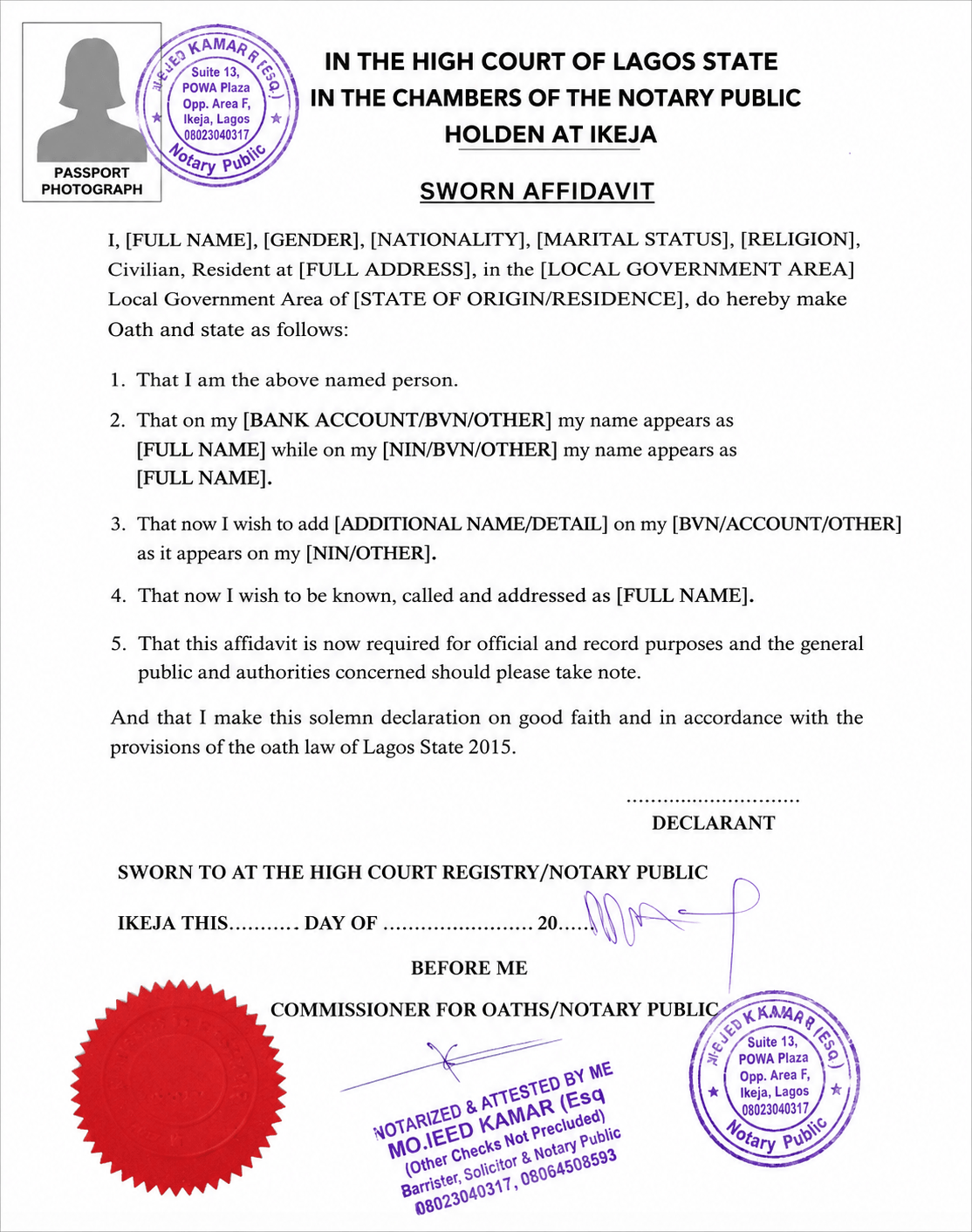
Get Your Affidavit Processed Quickly and Professionally
Obtain sworn affidavits for name changes, loss of documents, correction of information, age declaration, and other legal declarations with expert assistance.
Request an AffidavitWhere Can Nigerian Students Authenticate Their Academic Documents for the Korean Government Scholarship?
Nigerian students use several offices in sequence:
- Notary Public offices in Abuja, Lagos, and other cities handle notarization.
- The Federal Ministry of Education attests academic certificates before the next step.
- The Federal Ministry of Foreign Affairs headquarters in Abuja authenticates the document.
- The Embassy of the Republic of Korea in Abuja handles consular matters, and the Korean Cultural Centre handles GKS enquiries.
- Trusted document support services like us at DocuTrust Africa coordinate the entire chain for students who live outside Abuja or outside Nigeria.
Students abroad face the biggest hurdle, because the chain requires physical visits to Nigerian ministries.
How DocuTrust Africa Helps You Win More Than Just the Paperwork
The scholarship competition ends long before an interviewer meets you, since an incomplete file never reaches the committee. DocuTrust Africa handles document authentication for embassy verification, immigration, and study abroad, plus affidavit services and newspaper publication for name corrections, age declarations, and lost documents.
The team’s five-step process, consultation, requirement review, document submission, processing support, and confirmation, gives Nigerian students a clear timeline and a complete file. Students in Lagos, Port Harcourt, or Houston use the same process, and the team tracks every ministry and embassy stage so you never miss a window. Reach DocuTrust Africa at support@docutrustafrica.com or +234 704 029 4819, or start an application through the DocuTrust Africa portal.
Conclusion
The Korean Government Scholarship offers Nigerian students one of the most generous study packages in the world, covering tuition, flights, living costs, and a year of language training. Success depends on three things: meeting the age and degree rules, building a strong study plan, and submitting a correctly authenticated file before the deadline.
Because Nigeria stays outside the Hague Apostille Convention, Nigerian applicants must plan extra time for notarization, ministry authentication, and consular confirmation. Start early, fix name or birth record problems first, and confirm every detail on the official Study in Korea portal. When you want an expert to handle the authentication chain, affidavits, and newspaper publication, DocuTrust Africa stands ready to guide every step.
Authenticate Your Documents with Confidence
Professional assistance for document authentication, verification, certification, and legalization services to help ensure your documents are accepted by the required institutions and authorities.
Start AuthenticationFrequently Asked Questions
Can Nigerians apply for the Korean Government Scholarship?
Yes. NIIED invites applicants from many countries, and Nigerians apply through the Embassy Track via the Korean Cultural Centre or directly to participating universities through the University Track.
Does the Korean Government Scholarship cover flights?
Yes. NIIED provides a round-trip economy airfare, one ticket to Korea and one home after you finish.
Do I need to speak Korean before I apply?
No. Most graduate scholars complete a free one-year Korean language programme first. TOPIK Level 5 or 6 holders skip that year, and every scholar needs TOPIK Level 3 to start the degree.
What GPA do I need?
Sources cite a minimum around 2.64 out of 4.0, or an equivalent grade conversion or class-rank proof. Nigerian students on a 5.0 scale should request an official conversion letter and check the current guidelines.
Can I apply through both the Embassy Track and the University Track?
No. You must choose one track, and Embassy Track candidates who pass the first round cannot switch to the University Track in the same cycle.
Are Nigerian documents eligible for an apostille?
No. Nigeria has not joined the Hague Apostille Convention, so Nigerian documents go through notarization, Ministry authentication, and consular confirmation instead.
Can DocuTrust Africa help me if I live abroad?
Yes. DocuTrust Africa coordinates document authentication, affidavits, and newspaper publication on behalf of Nigerian students at home and abroad, so you do not need to fly home for the paperwork.
References
- Study in Korea — “2026 GKS Graduate Notice“
- Study in Korea — Scholarships
- ScholarWing — “GKS Korean Government Scholarship 2026-27”
- TOPIK Guide — “GKS Graduate Scholarship 2026 Complete Guide”
- GKS Scholarship — “GKS Scholarship 2026 Apply Now”
- GKS Scholarship — “GKS Scholarship 2026 Graduate”
- GKS Scholarship — “GKS Scholarship 2027”
- GKS Scholarship — “Step by Step Guide on How To Apply for GKS Scholarship 2027”
- Korea University Graduate School — GKS benefits
- HaniSeoul — “2026 GKS-G Scholarship Benefits and Coverage”
- HaniSeoul TOPIK — “2026 GKS-G Scholarship Benefits and Support Breakdown”
- UNHCR Iran — “Call for Applications: Global Korea Scholarship 2026”
- GKS Graduate Application Checklist
- Embassy of the Republic of Korea to Nigeria — GKS notice
- Korean Cultural Centre Nigeria — “2024 Global Korea Scholarship, Graduate Program (Embassy Track)”
- Wikipedia — “Scholarships in Korea”
- Lexology — “Procedure for Authentication of Documents in Nigeria”
- Oaths Act, Laws of the Federation of Nigeria (LFN) 2004